En savoir plus sur les Oméga-3

L’EXPERTISE DU PROFESSEUR WILLIAM HARRIS (1)

L’indice de mesure du taux sanguin d’Oméga-3

Il est aujourd’hui possible de mesurer le taux sanguin d’Oméga-3 pour, le cas échéant, corriger son alimentation.

L’indice Oméga-3, selon le Professeur William S. Harris*, co-inventeur du test, est un marqueur de risque très utile et précis pour les maladies cardio-vasculaires.

« Les études épidémiologiques montrent une association très forte entre l’indice Oméga-3 et ces pathologies. C’est-à-dire qu’entre des personnes présentant les plus bas et les plus hauts taux d’Oméga-3, le risque de maladie coronarienne diminue de 90% ».

« En outre, cet index est indépendant d’autres facteurs de risque, et surtout, il est facilement modifiable ».

Ses travaux ont permis de fixer un niveau recommandé d’oméga-3 (entre 8 et 12%) et de mesurer les écarts considérables selon les régions du monde et les cultures alimentaires.

Les Japonais et les Norvégiens sont les champions (8-12%) en vertu de leur consommation élevée de poissons gras, tandis que les Américains sont à un niveau critique (autour de 4%).

Quant à nous, Français, nous avons indubitablement une marge de progression … notre index se situant autour de 6%.

(1) PROFESSEUR WILLIAM S. HARRIS PHD Professeur de médecine à !’University of South Dakota Sanford School of Medecine, Auteur et co-auteur de plus de 350 publications scientifiques sur le rôle des Oméga-3.

AMÉLIORER SON CAPITAL OMÉGA-3

Deux études* montrent qu’il est possible facilement et rapidement d’augmenter le taux d’Oméga-3 :

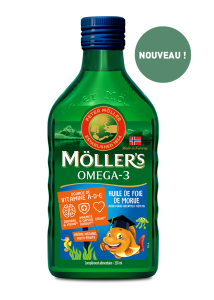
Avec 1500 mg d’EPA+DHA par jour (soit 7.5ml d’huile de foie de morue), il est possible de passer d’un indice de 4% à 8% en 5 mois.

What is good health?

Do you have a good lifestyle?

Lifestyle simply means the way in which you live. Health and lifestyle go hand in hand. You might feel you have a good lifestyle if you are physically active, eat healthily and generally experience a sense of wellbeing. Conversely, if you want good health you should also have a good lifestyle.

Physical activity is the major contributor to a good lifestyle, but diet, drugs, stress, sleep and social conditions are also play an important role. Being able to use the body properly to avoid injury also affects lifestyle. Physical activity can also prevent depression and help you to recover more quickly from mental illness, both of which obviously affect your lifestyle.

Diet can be a difficult topic for many. Perhaps you eat too much or too little or maybe you find it hard to know what foods to combine to have a balanced diet. It’s also important to eat food that contains important vitamins, minerals and dietary fibre, omega-3 and antioxidants. On top of all this, you also need to get enough energy, protein and the correct fatty acids. The requirement for these nutrients changes throughout your life. When you are older you also have different requirements than children and younger adults. Women also have different requirements than men. Pregnant and breastfeeding mothers also have special requirements.

When you get older, you lose muscle mass and your body requires less energy and therefore less food. You may lead a less active life than you did before, which is why you require less food. However, your need for minerals, vitamins and other nutrients remains the same. Of course, there are plenty of healthy and active older people, but when you reach 70 to 80 years of age, it’s easier to become ill, especially during flu season.

Some steps you can take to improve your lifestyle and health are to:

What is good quality of life?

The World Health Organisation (WHO) defines quality of life as a state where the individual can realise their potential, cope with normal stressful situations, work in a rewarding and positive way, and be able to contribute to others and society. 

Quality of life is a wide and somewhat diffuse concept that includes joy in, and a desire for, life. These are values that are rather felt than measured, which in turn are based on personal environment and choices. Quality of life doesn’t necessarily depend on being healthy or sick. It’s the moments between worries, sorrows, problems and ailments that matter. For example, if you have a chronic illness, a feeling of mastery can be important when talking about quality of life.

To sum up, quality of life is a combination of health, lifestyle, networks and social support. It’s about experiencing joy, meaning in life, satisfaction, security and a sense of belonging, as well as being able to use your strengths. It’s also about feeling interest in life, coping with everyday situations and a being committed to something or someone. If you have good quality of life, you will be able to cope better with the inevitable stressful situations in life.

Nos produits

Suivez-nous sur Instagram

This error message is only visible to WordPress admins
There has been a problem with your Instagram Feed.